

-
Cart
( 0 )
My Basket
0 ITEMS IN YOUR BASKET
Door Stops
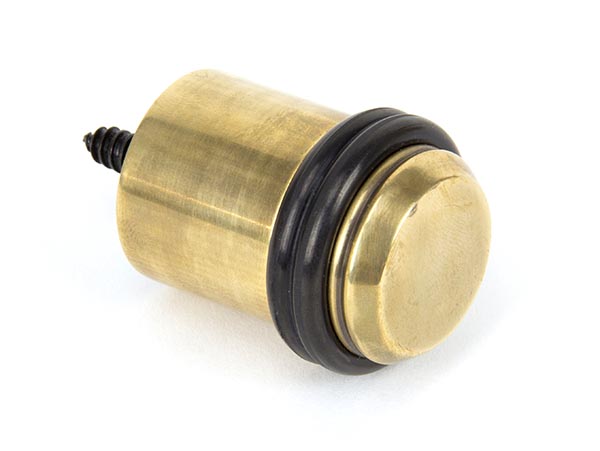
Aged Brass Floor Mounted Door Stop, from our current range.
What is a door stop?
A door stop is a simple fitting designed to prevent a door, or its handle, from striking and damaging a wall, radiator, skirting board or piece of furniture when the door is opened. Without one, repeated impacts can leave dents in plaster, chip paintwork, or eventually damage the handle or hinge itself. Door stops are inexpensive, but choosing the right type and position makes a real difference to how well they work.
The two most common types are floor mounted stops, screwed to the floor at the point the door would otherwise strike the wall, and projection or wall mounted stops, fixed to the skirting board or wall at door handle height.
Where door stops are used
- Internal doors – almost any door that opens against a wall benefits from a stop, particularly where a handle would otherwise mark the plaster
- Rooms with limited wall space – a projection or skirting-mounted stop is often preferred where floor space near the door is used for furniture
- Hallways and high traffic areas – doors that are opened frequently are the most likely to cause wall damage without a stop fitted
Choosing the right door stop
A few practical points are worth checking before you buy:
- Floor vs wall mounted – floor mounted stops suit rooms with clear floor space near the door; wall or skirting mounted stops suit tighter spaces
- Projection length – the stop needs to project far enough to catch the door or handle before it reaches the wall
- Trip hazard – a floor mounted stop positioned in a walkway can be a trip hazard; check the position before fitting
- Finish – see our Hardware Finishes Guide to match other door furniture in the room
Related products
Browse our current range of Door Stops via search, or see the related categories in our Door Furniture Guide, including Door Closers.
Frequently asked questions
Should I choose a floor or wall mounted door stop?
This depends on the room: a floor mounted stop works well where there is clear floor space, while a wall or skirting mounted stop is a better choice where furniture or rugs are close to the door.
Will a door stop damage my floor?
A floor mounted stop is screwed down, so it does leave small fixing holes. If you would rather avoid this, a wall or skirting mounted stop is a good alternative.
Can a door stop be fitted to a hollow door?
Door stops fix to the wall, floor or skirting, not the door itself, so the door's construction does not affect fitting. It is the wall or floor fixing that needs checking, particularly for stud walls.
Back to the Door Furniture Guide, or explore the full Knowledge Centre.


