

-
Cart
( 0 )
My Basket
0 ITEMS IN YOUR BASKET
Push Plates
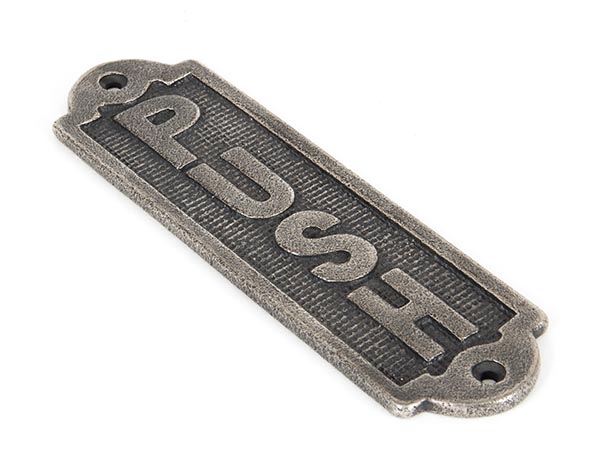
Antique Pewter Push Sign, from our current range.
What is a push plate?
"Push plate" covers two related but slightly different pieces of door furniture. On commercial and public building doors, a push plate is usually a functional protective plate, similar to a finger plate, fitted to the side of the door that is pushed open, taking the wear that would otherwise mark the door face. On other doors, particularly period and characterful properties, a smaller "push sign" is fitted instead – a plate engraved or cast with the word PUSH, telling visitors which way to operate the door rather than protecting it.
Push signs are often paired with a matching PULL sign on the opposite face or door, and are a small, traditional detail commonly seen on shops, offices and period commercial premises.
Where push plates are used
- Shop and office doors – push signs are a traditional feature on period commercial doors, telling customers which way to operate the door
- Doors without a handle on the push side – where a door is designed to be pushed rather than pulled, a sign or plate makes this clear at a glance
- High traffic commercial doors – a full-size protective push plate guards the door face in the same way a finger plate does on a domestic door
Choosing the right push plate
A few practical points are worth checking before you buy:
- Sign or full plate – decide whether you need a small engraved push sign, or a larger protective plate; the two serve different purposes
- Pairing with a pull handle – push plates are often fitted opposite a pull handle on the other face of the door
- Finish – see our Hardware Finishes Guide to match your other door furniture
Related products
Browse Push Signs via search, or see the related categories in our Finger Plates and Pull Handles guides.
Frequently asked questions
What's the difference between a push plate and a push sign?
A push plate is typically a larger protective plate guarding the door face, similar to a finger plate. A push sign is smaller and engraved with the word PUSH, telling visitors how to operate the door rather than protecting it.
Do I need both a push sign and a pull handle?
Not necessarily, but on commercial doors it is common to fit a pull handle on one face and a push sign or plate on the other, making it clear how the door should be operated from both sides.
Are push signs only used on commercial doors?
They are most common on shop, office and other commercial doors, but there is no reason a push sign cannot be used on a domestic door if the style suits the property.
Back to the Door Furniture Guide, or explore the full Knowledge Centre.


