

-
Cart
( 0 )
My Basket
0 ITEMS IN YOUR BASKET
Tee & Strap Hinges
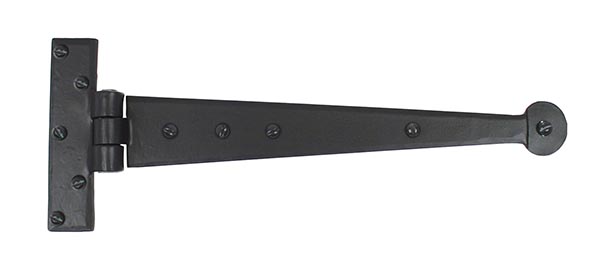
Black 12" Penny End T Hinge (pair), from our current range.
What is a Tee or strap hinge?
Tee hinges and strap hinges are surface-mounted hinges fixed to the face of a door rather than recessed into its edge, with a long visible arm running across the door and a shorter pin section fixed to the frame. A Tee hinge takes its name from the T shape this creates, while a strap hinge, sometimes fitted in a pair without the cross-piece, uses two matching straps. Both styles are traditionally associated with ledged and braced doors, sheds, gates and barns, where the visible ironmongery is as much a feature as it is functional.
Because they mount to the surface, Tee and strap hinges are well suited to thinner or more basic doors that would not easily accept a recessed butt hinge.
Where Tee and strap hinges are used
- Ledged and braced doors – the traditional pairing, common on cottage, barn and outbuilding doors
- Sheds and outbuildings – a practical, easy-to-fit hinge for lighter timber doors and gates
- Gates – heavier duty versions are also used on garden and field gates, alongside dedicated gate hinges
Choosing the right Tee or strap hinge
A few practical points are worth checking before you buy:
- Length – longer hinges spread the load further across a wide or heavy door, reducing sag over time
- Tip style – decorative tips such as arrow head or penny end are available for a more traditional appearance
- Weight rating – match the hinge to the weight and size of your door or gate
- Finish – see our Hardware Finishes Guide for period-appropriate finish choices
Related products
Browse our current range in Door Hinges, or see the related Gate Hinges guide.
Frequently asked questions
What's the difference between a Tee hinge and a strap hinge?
A Tee hinge has a cross-piece fixed to the frame, forming a T shape with the long arm on the door. A strap hinge typically uses two matching long straps, one on the door and one on the frame, without the T-shaped cross-piece.
Do I need decorative tips on my hinges?
This is purely a style choice; plain ends suit a simple, functional look, while arrow head or penny end tips add a more traditional, decorative finish.
Can Tee hinges be used on a heavy door?
Longer, heavier duty Tee and strap hinges can carry substantial weight, but for very heavy timber doors it is worth checking the specific weight rating or considering a dedicated gate hinge instead.
Back to the Hinges & Door Control Guide, or explore the full Knowledge Centre.


