

-
Cart
( 0 )
My Basket
0 ITEMS IN YOUR BASKET
Rim Locks
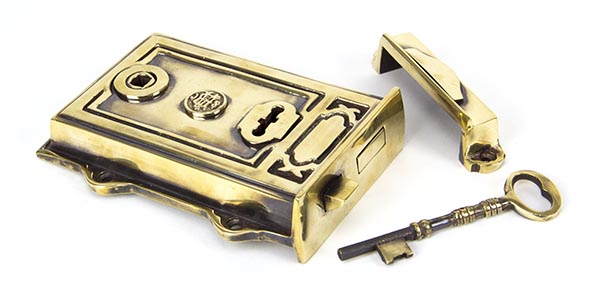
Aged Brass Davenport Rim Lock, from our current range.
What is a rim lock?
A rim lock is a lock body fixed to the surface of a door, rather than recessed into a mortice cut into the door edge. This makes rim locks straightforward to fit to doors too thin or fragile for a mortice lock, and they remain closely associated with period properties, where a traditional cased rim lock, often in a decorative finish, is as much a visual feature as a functional one.
Rim locks are frequently used alongside a separate mortice lock, giving the character of a period lock case combined with the extra security of a concealed mortice mechanism elsewhere on the door.
Where rim locks are used
- Period and character properties – the traditional choice, particularly on Georgian and Victorian doors
- Thin or ledged and braced doors – doors too thin for a mortice lock can still take a surface-mounted rim lock
- Secondary security – often fitted alongside a mortice lock for a combination of period character and modern security
Choosing the right rim lock
A few practical points are worth checking before you buy:
- Case style – traditional cased rim locks come in a range of period-appropriate designs and finishes
- Handing – some rim locks are handed for a specific door swing; check this before ordering
- Door thickness – confirm the lock's backset and keep suit your door and frame
- Finish – see our Hardware Finishes Guide to match other period door furniture
Related products
Browse our current range in Locks & Latches, or see the related Night Latches guide.
Frequently asked questions
What's the difference between a rim lock and a night latch?
Both are surface-mounted, but a night latch typically has a sprung latch that self-locks and can be opened from inside with a handle, while a traditional rim lock is more often key-operated on both sides in a period-style case.
Can a rim lock be fitted to any door?
Most timber doors can accept a rim lock, since it mounts to the surface rather than requiring a mortice, though very thin doors may still need the right case depth.
Do rim locks need to be paired with another lock?
Not necessarily, but many customers choose to fit a rim lock alongside a mortice lock for extra security, particularly on period front doors.
Back to the Locks & Security Guide, or explore the full Knowledge Centre.


