

-
Cart
( 0 )
My Basket
0 ITEMS IN YOUR BASKET
Door Handle Buying Guide
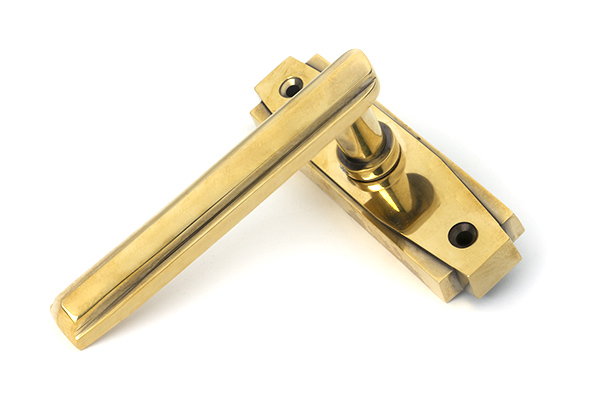
Aged Brass Art Deco Lever on Rose Set, from our current range.
Choosing the right door handle
Door handles are one of the most-touched fittings in any building, and one of the easiest ways to change the character of a door. But beyond looks, a few practical decisions determine whether a handle will work properly and last: the handle type, how it is fitted, the spindle size, and whether the mechanism is sprung.
This guide covers the main decisions to work through before buying. For a specific handle type, see our dedicated guides to Lever Handles, Mortice Knobs and Pull Handles.
Step 1: Decide on the handle type
- Lever handles – the standard choice for the vast majority of internal and external doors, operated by pressing down a horizontal lever. See our Lever Handles guide.
- Mortice knobs – round knobs that suit period doors and are often paired with a mortice lock rather than a spring latch. See our Mortice Knobs guide.
- Pull handles – fitted to doors that are pulled open rather than latched, such as glazed doors or cupboards. See our Pull Handles guide.
Step 2: Rose or backplate
Lever and knob handles are fitted in one of two ways. Rose fittings use a small circular back plate behind each handle, and generally suit contemporary or minimalist doors. Backplate fittings use a longer plate that also covers the keyhole or cylinder, giving a more traditional look, and are useful when replacing an older handle as they cover existing screw holes.
Step 3: Check the spindle size
Most UK doors use an 8mm square spindle as standard. If you are replacing an existing handle, check the old spindle size before ordering, particularly on older doors, uPVC doors, or imported ironmongery, where sizes can vary.
Step 4: Sprung or unsprung
A sprung handle returns to a level resting position after use. An unsprung handle relies on a tension spring within the latch or lock instead, and can start to droop over time if that spring is weak. If a handle will see heavy daily use, a good quality sprung mechanism is worth the extra cost.
Step 5: Match the finish
Finish has a big impact on how a handle reads on the door. See our Hardware Finishes Guide for advice on choosing between brass, black, pewter, bronze and other finishes, including which finishes suit period versus contemporary properties.
Step 6: Consider the door type
- Internal doors – usually paired with a latch, or a privacy lock for bathrooms
- Front and back doors – paired with a sashlock or multi-point locking system, see our Locks & Security Guide
- Fire doors – handles used on certified fire door sets need to be tested as part of that door set, generally fitted on rose
Related guides
Browse our Door Furniture range, or see our related guides: Black vs Satin Brass Door Handles, Best Door Handles for Oak Doors and Hardware Finishes Guide.
Frequently asked questions
What size spindle do most door handles use?
Most UK door handles use an 8mm square spindle as standard, though it is always worth checking against your existing handle or door thickness before ordering.
Should I choose lever on rose or lever on backplate?
Rose fittings generally suit contemporary and minimalist doors, while backplates suit period properties and are useful when replacing an older handle, as the plate covers existing screw holes.
Do fire doors need special handles?
Yes. Handles fitted to a certified fire door set need to be tested and approved as part of that door set, and are generally fitted on rose rather than backplate.
How do I stop a new handle looking untidy after a year?
This is almost always down to the mechanism rather than the finish. A well made sprung handle keeps its position, while a cheaper unsprung handle can start to droop as its internal spring weakens.
Back to Buying Guides, or explore the full Knowledge Centre.


