

-
Cart
( 0 )
My Basket
0 ITEMS IN YOUR BASKET
Which Door Hinge Do I Need?
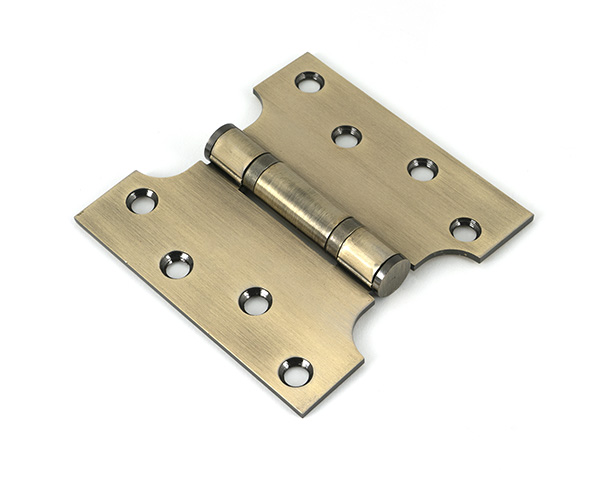
Aged Brass Parliament Hinge (pair), from our current range.
Choosing the right hinge
Hinges are easy to overlook, but the wrong choice is one of the most common causes of a door that binds, sags or will not close properly. The right hinge depends mainly on the weight and thickness of the door, how far it needs to open, and how often it is used.
This guide covers how to choose between the main hinge types we stock. For more detail on a specific type, see our dedicated guides to Butt Hinges, Ball Bearing Hinges and Parliament Hinges.
Standard internal and external doors: butt hinges
A butt hinge is the standard choice for the vast majority of internal and external doors. Two leaves are recessed flush into the door edge and frame, so the door sits close when closed. Most standard doors use three 4 inch (100mm) butt hinges, though a heavier fire door or an external door may need four.
Heavy or frequently used doors: ball bearing hinges
A ball bearing hinge is a butt hinge with bearings built into the knuckle, giving smoother, quieter operation and reducing wear under heavier loads. They are the right choice for heavier doors, fire doors, and any door in frequent daily use, such as a front door or a busy internal door in a commercial building. See our Ball Bearing Hinges guide.
Doors that need to open flat: parliament hinges
A parliament hinge projects the door away from the frame when open, allowing it to swing back flat against the wall. This is useful where a door needs to clear thick architrave, radiators or shutters, or where a fully open door is needed for access, such as moving furniture through a doorway. See our Parliament Hinges guide.
Gates and heavy external doors
Gates, and doors that need a decorative or traditional appearance from outside, generally use a tee hinge, strap hinge, or a dedicated gate hinge, rather than a concealed butt hinge. See our Tee & Strap Hinges and Gate Hinges guides.
Cabinet doors
Cabinet doors use a different family of hinges entirely, sized and sprung for lighter, smaller doors. See our Cabinet Hinges guide.
Things to check before buying
- Size – hinges are sold by leaf length, most commonly 3 or 4 inches for internal and external doors; a heavier door generally needs a larger or a greater number of hinges
- Fire door certification – a fire door needs hinges tested and certified as part of a fire door set, generally ball bearing hinges rated for the door's fire rating
- Finish – see our Hardware Finishes Guide to match your hinges to your door furniture
- Handing – some hinges, particularly parliament hinges, may need to be specified for a left or right hand hung door
Related guides
Browse our Hinges range, or see our full Hinges & Door Control Guide.
Frequently asked questions
How many hinges does a standard door need?
Most standard internal and external doors use three hinges. A heavier door, such as a solid fire door, may need four to spread the load and prevent sagging.
What size hinge do I need?
4 inch (100mm) hinges are the standard size for most internal and external doors in the UK. Smaller 3 inch hinges are sometimes used on lighter internal doors, and cabinet doors use much smaller specialist hinges.
Do I need ball bearing hinges?
Ball bearing hinges are recommended for heavier doors, fire doors, and any door used frequently throughout the day, as the bearings reduce wear and keep the door operating smoothly for longer.
What is a parliament hinge used for?
A parliament hinge projects the door away from the frame so it can open flat against the wall, useful where thick architrave, radiators or shutters would otherwise stop the door opening fully.
Back to Buying Guides, or explore the full Knowledge Centre.


